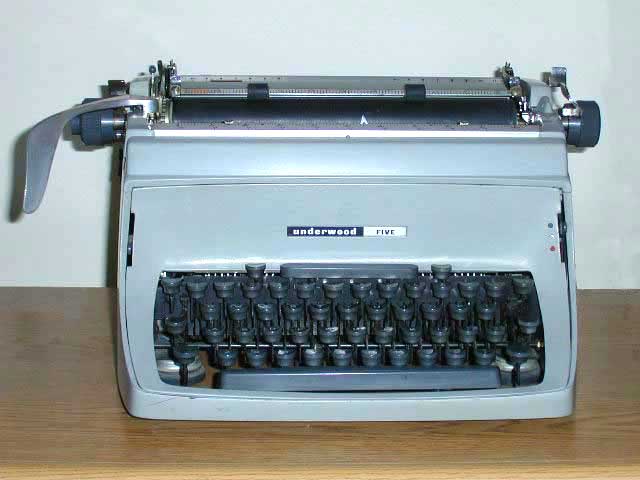
With ever changing technology it's easy to forget where we started. In this case, I'm referring to the typewriter. When one thinks of a typewriter you might think of creating or filling in documents and the challenges of correcting mistakes.
What about using it for art?
A colleague of mine shared a video with me a while ago. I found it inspiring. We all have different abilities. The most important thing is to do our best at whatever we attempt; and never give up on ourselves. You never know who might be touched by your work, actions, or words.
The artist, Paul Smith, featured in this video had cerebral palsy. Despite the physical challenges, he created beautifully detailed artwork using only a typewriter.
Paul Smith (September 21, 1921 – June 25, 2007) American Typewriter Artist
(Science, Technology, Engineering, Arts, and Math)
I came across a video today that got me thinking about this topic.
Part of teaching is to connect lessons to real world situations. I love to make connections to other subject matter in my class as it relates to our artwork. This makes learning more relevant. When someone taps into something that is of personal interest we tend to want to get involved and sometimes even dig deeper than we would otherwise (I know I do anyway.).
Art plays a part in the board design. Graphic artists create all sorts of art that can be seen on skateboards today.
How Skateboards are Made
A High School Art Class Designs Their Own Skateboards
Math and Science is involved when you consider the overall design of the board from wheels, shape, length, etc. The principles of motion also come into play. There's a lot of strategic thinking involved as the skater maneuvers through obstacles in their environment. Check out some of these videos featuring, Bill Robertson, Ph. D. - Dr. Skateboard (Professor, Educator, Skateboarder, Action Scientist).
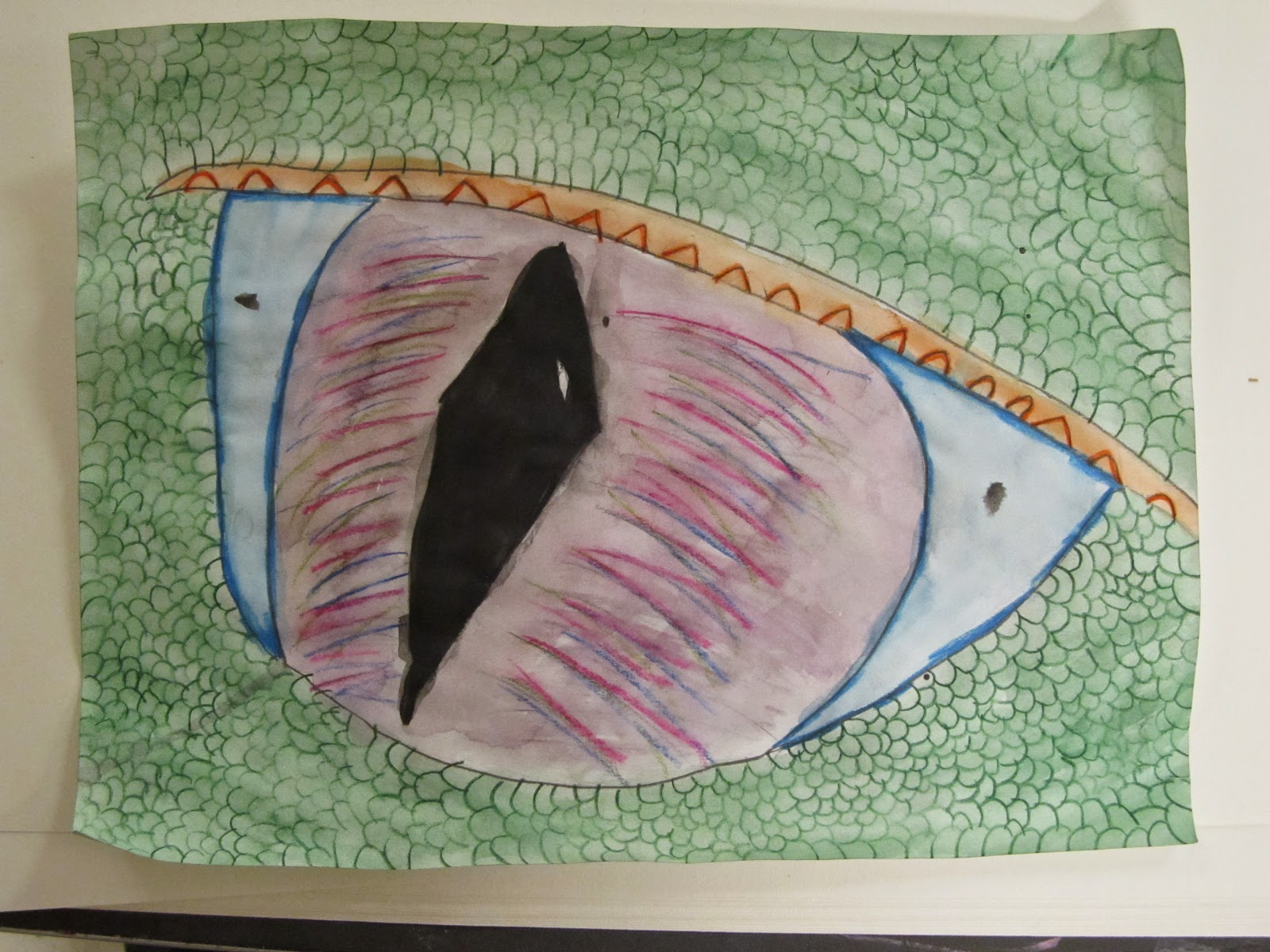
We created our own versions of a close up of a dragon eye. Students chose from a few different reference pictures that were printed to use for inspiration. After they competed their pencil drawings they were able to explore using watercolor pencils as the finishing medium. I hope to post some of their finished pieces later.
The video below shows how my example came into being.
I found this story very inspiring and wanted
to share it.
Jeffrey Owen Hanson is a young artist and philanthropist.Although he faces some challenges with a learning
disability and vision impairment due to tumors on the optic nerve, he works to
make a difference in the lives of others. Jeffrey creates art and sells it to benefit organizations
that are important to him.